From the Publisher
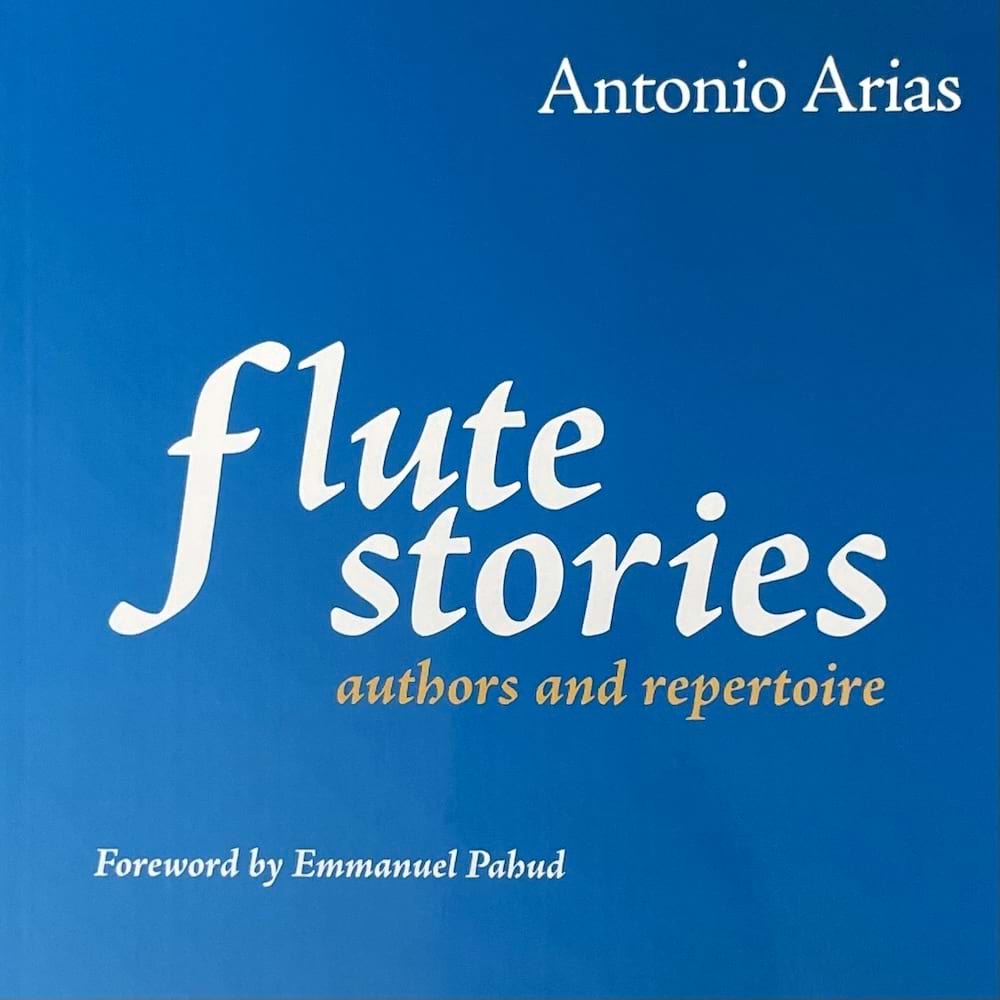
With a total of 1,300 pages and 232 composers, the latest edition of Historias de la flauta, revised and expanded, was presented at the recent AFE Convention.
The prestigious flutist Emmanuel Pahud has honored me by writing the prologue to this new edition.
This work aims to bring together a series of commentaries, information, and reflections on the main works of the flute repertoire, in a broad stylistic sense. I have tried to satisfy the needs of a majority of musicians or music lovers eager to know details about the flute repertoire. Historically, I have considered the three centuries between 1700 and the present day.
Whenever possible, I have consulted the composers themselves, when they are living, or their families, in the case of those who died in the 20th century. I have been able to obtain commentaries written by some of the composers who are still alive, or provided by their direct descendants. I consider them invaluable evidence, for which I hasten to express my gratitude.
I have placed special emphasis on the Spanish repertoire. The fundamental reason is that it is a cultural heritage that is poorly understood not only outside of Spain but also within it, and, moreover, is in danger of disappearing due to the historical neglect of our own culture, which is often responsible for numerous attacks on cultural heritage.
In isolated cases, I have not hesitated to include works for recorder or transcriptions from other instruments when this seemed justifiable to me because they had entered the repertoire of the transverse flute.
The work is divided into three parts: the first is the body of the book itself. The second is a chronological table in which works for flute and flutists are placed in relation to historical, scientific, and musical events. The third provides an index of publishers of the works discussed.
I firmly believe that what we understand by "style" or "interpretation" is intimately linked to the emotional and human profile of a composer and to the cultural and social context of their work. So if, after reading a composer's entry, the performer feels "complicit" in their work, identifying with their emotions and sharing them with their audience, and if a music lover perceives the message of a friend when listening to a work, the effort of these years of work will have been worth it.
The book is dedicated to the memory of my Master Alain MARION, whose widow is the author of the preface. In this she wrote: "The history of the flute can only be a love story. The world of the flute has nothing but lovers, passionate in search of the impossible."
|