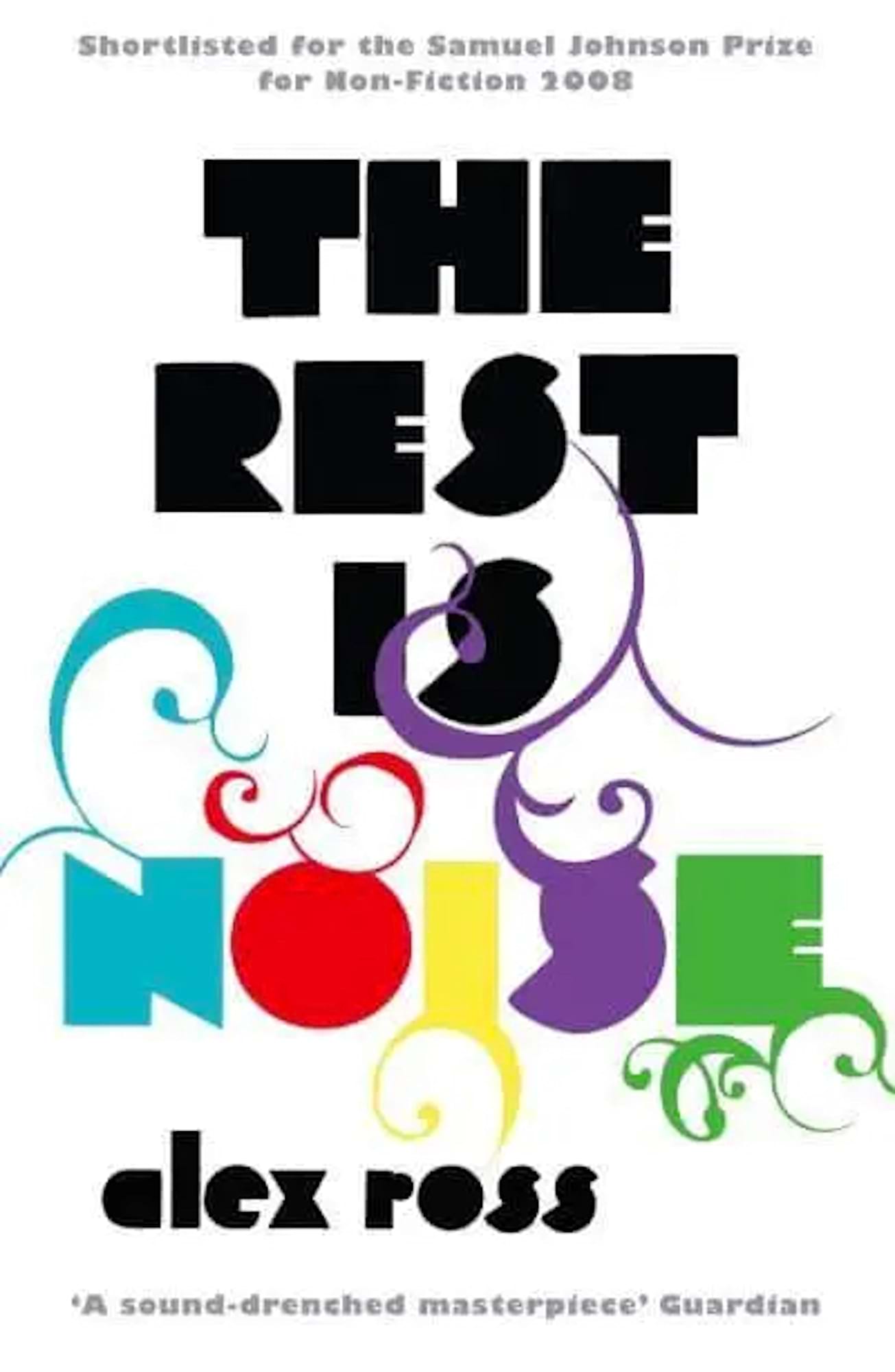
The scandal over modern music has not died down. While paintings by Pablo Picasso and Jackson Pollock sell for a hundred million dollars or more, shocking musical works from Stravinsky?s Rite of Spring onward still send ripples of unease through audiences. At the same time, the influence of modern music can be felt everywhere. Avant-garde sounds populate the soundtracks of Hollywood thrillers. Minimalist music has had a huge effect on rock, pop, and dance music from the Velvet Underground onward. Alex Ross, the brilliant music critic for The New Yorker, shines a bright light on this secret world, and shows how it has pervaded every corner of twentieth century life. The Rest Is Noise takes the reader inside the labyrinth of modern sound. It tells of maverick personalities who have resisted the cult of the classical past, struggled against the indifference of a wide public, and defied the will of dictators. Whether they have charmed audiences with the purest beauty or battered them with the purest noise, composers have always been exuberantly of the present, defying the stereotype of classical music as a dying art. Ross, in this sweeping and dramatic narrative, takes us from Vienna before the First World War to Paris in the twenties, from Hitler?s Germany and Stalin?s Russia to downtown New York in the sixties and seventies. We follow the rise of mass culture and mass politics, of dramatic new technologies, of hot and cold wars, of experiments, revolutions, riots, and friendships forged and broken. In the tradition of Simon Schama?s The Embarrassment of Riches and Louis Menand?s The Metaphysical Club, the end result is not so much a history of twentieth-century music as a history of the twentieth century through its music.
Biographie de l'auteur
Alex Ross graduated from Harvard in 1990. He wrote for the New York Times from 1992 until 1996 when he became staff writer at the New Yorker. His first book The Rest is Noise is about the cultural history of music since 1990, which won the Guardian First Book Award. It was also shortlisted for the Samuel Johnson non-fiction prize and the Pulitzer Prize. He is also the author of Listen to This. He lives in Los Angeles.
Revue de presse
‘Alex Ross's incredibly nourishing book will rekindle anyone's fire for music.’ Björk
‘A brilliant, bracing account of all the different kinds of “classical” music that have permeated this last dark century. Such an entertaining, accessible and enthralling book.’ Colin Greenwood, Guardian
‘It’s a history of 20th-century music so vivid and original in approach that it made me listen again to many pieces I thought I knew well.’ Philip Pullman, Guardian
‘Ranks as my non-fiction book of the year. Erudite and engaging, written with flair and passion.’ Boyd Tonkin, Independent
‘Combines scrupulous and inventive analyses of the 20th century’s music with lavish care over that music’s improvised history.’ Adam Thirlwell, Guardian
‘Magisterial.’ Telegraph
‘He places the music in social and cultural context while sticking to the score and eschewing the artworld political consensus. A miracle.’ George Walden, TLS
‘”The Rest is Noise” achieves the aim with bravura, hacking out a path leading from cacophonous European modernism to the white noise of The Velvet Underground.’ Ludovic Hunter-Tilroy, Financial Times
‘Alex Ross breaks new ground. This is an astonishing book.’ The Times
'Just occasionally someone writes a book you've waited your life to read. Alex Ross's enthralling history of 20th-century music is, for me, one of those books.' Alan Rusbridger, Guardian
‘Stunning narrative. Visionary music critic Alex Ross comes closer than anyone to describing the spellbinding sensations music provokes.’ Financial Times
‘A work of immense scope and ambition … a great achievement. Rilke once wrote of how he learned to stand “more seeingly” in front of certain paintings. Ross enables us to listen more hearingly.’ New York Times
'A sound-drenched masterpiece.' Steven Poole, Guardian
|